
AIR4Health
Transformative Technologies for Healthcare and Environmental Resilience (TTHER)
The Transformative Technologies for Healthcare and Environmental Resilience (TTHER) project is hosted by Edinburgh Napier University, United Kingdom, as part of the International Science Partnerships Fund (ISPF) Early Career Fellowships programme.
The project supports early-career researchers from Thailand, Malaysia, and Vietnam to conduct research in advanced technologies for healthcare, environmental resilience, and sustainable development. It focuses on applying artificial intelligence, robotics, wearable technologies, Internet of Things systems, digital health, precision medicine, and autonomous systems to address real-world challenges in the UK and ASEAN region.

Supported by
The TTHER project is supported by the International Science Partnerships Fund (ISPF) and the British Council, and is hosted by Edinburgh Napier University. The ISPF supports international research and innovation partnerships that address major global themes, including Healthy People, Transformative Technologies, Resilient Planet, and Tomorrow’s Talent.
Project Aim
The aim of TTHER is to develop innovative and practical technology-based solutions that improve healthcare delivery, support elderly populations, enhance rehabilitation, strengthen emergency response, and promote sustainable healthcare systems.
The project also supports international collaboration between the UK and ASEAN countries by helping early-career researchers build research networks, develop new skills, and contribute to long-term knowledge exchange.
Research Areas
1. AI-Enabled Falls Prevention Device for Elderly Populations
This research focuses on developing an AI-enabled portable diagnostic device to help prevent falls among elderly people. The device uses sensors and artificial intelligence to analyse gait, balance, and physiological data in real time. The goal is to predict fall risk, reduce injuries, and improve preventive healthcare for ageing populations.
2. Robotics and AI for Industry 5.0 in Healthcare
This research explores how robotics and AI can support more intelligent, efficient, and patient-centred healthcare systems. It applies the concept of Industry 5.0 to healthcare by combining human-centred care with advanced automation and AI-driven technologies.
3. Exoskeleton Robots for Multistage Rehabilitation
This area focuses on developing exoskeleton robots to support patients with mobility challenges. These systems can assist patients during different stages of rehabilitation, helping improve mobility, strength, independence, and recovery outcomes.
4. Autonomous Electric Vehicles for Emergency Services
This research investigates autonomous electric vehicles for emergency response, search and rescue, and disaster relief. The aim is to improve safety and efficiency in emergency operations, especially in complex or dangerous environments.
5. AI-Driven Body Area Networks for Patient Monitoring
This research focuses on Body Area Networks using wearable or implantable sensors to collect continuous health data. These systems support real-time patient monitoring, chronic disease management, and early detection of health risks.
6. IoT Healthcare Ecosystem for Continuous Monitoring
This area explores the use of Internet of Things technologies to build connected healthcare systems. By collecting and analysing real-time data, IoT healthcare systems can support continuous monitoring and proactive patient care, especially for elderly people and patients with chronic conditions.
7. Artificial Intelligence for Digital Health and Precision Medicine
This research uses AI to support digital health and precision medicine. It includes wearable sensors, predictive modelling, genomics, and data-driven healthcare tools to improve health outcomes, particularly in ASEAN communities and rural settings.
ISPF Research Fellows / Participants
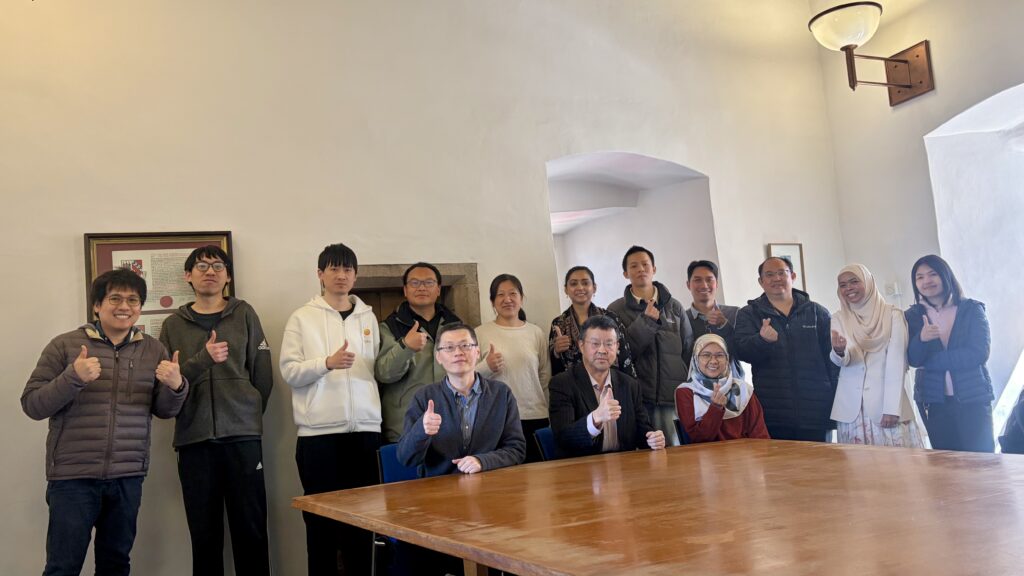
The TTHER project brings together ISPF Research Fellows from Thailand, Malaysia, and Vietnam.
- Dr. Arunee Promsri – ISPF Research Fellow, University of Phayao, Thailand
- Dr. Naret Suyaroj – ISPF Research Fellow, Chiang Mai University, Thailand
- Dr. Worawit Tepsan – ISPF Research Fellow, Chiang Mai University, Thailand
- Dr. Ahmad Hakimi – ISPF Research Fellow, Malaysia
- Dr. Ahsiah Binti Ismail – ISPF Research Fellow, International Islamic University Malaysia, Malaysia
- Dr. Muna Azuddin – ISPF Research Fellow, International Islamic University Malaysia, Malaysia
- Dr. Nhut-Thanh Tran – ISPF Research Fellow, Can Tho University, Vietnam
Project Benefits
Through the TTHER project, ISPF Research Fellows have the opportunity to:
- Conduct independent research at Edinburgh Napier University
- Work with experienced academic mentors
- Access advanced facilities and research networks
- Collaborate with UK and ASEAN partners
- Develop innovative healthcare and resilience technologies
- Contribute to sustainable development and international knowledge exchange
Project Impact
The TTHER project contributes to the development of future healthcare and environmental resilience technologies. By combining expertise in AI, robotics, IoT, wearable systems, digital health, rehabilitation, and autonomous systems, the project aims to create practical solutions that can improve quality of life and support sustainable healthcare innovation.
The project strengthens collaboration between Edinburgh Napier University and researchers from Thailand, Malaysia, and Vietnam, helping to build long-term research partnerships between the UK and ASEAN region.