

AIR4Health
Projects
The AI & Robotics for Healthcare (AIR4Health) research group at Edinburgh Napier University, led by Professor Hongnian Yu, directs a high-impact international portfolio spanning healthcare technologies, autonomous multi-agent robotics, wearable physiological sensing, trustworthy generative AI, and Industry 5.0 cyber-physical systems.
9+
Research Initiatives
Active flagships & completed translational grants
Global
International Consortia
Partnerships across UK, Europe & ASEAN (TH, MY, VN)
Prestigious
Flagship Funders
ISPF, Horizon Europe, British Council & Industry
A · I · R
Research Pillars
Intelligent Sensing, Connected Health Systems, Robotics & Rehabilitation
Active & Flagship Projects
6 Active
Current multi-year research programmes addressing pressing challenges in clinical diagnosis, emergency response robotics, elderly care, and secure healthcare AI.
Active Flagship AR ISPF • British Council
Dec 1, 2024 – Apr 30, 2027
Transformative Technologies for Healthcare and Environmental Resilience (TTHER)
Hosted by Edinburgh Napier University as part of the UK International Science Partnerships Fund (ISPF) Early Career Fellowships, supporting visiting cohorts of researchers from Thailand, Malaysia, and Vietnam in AI-enabled falls prediction, wearable diagnostic devices, multistage rehabilitation robotics, and autonomous emergency systems.
Active Flagship R European Consortium
Nov 1, 2024 – Oct 31, 2028
Intelligent Modular Autonomous Robotics for First Responders (iMARS)
A 4-year multinational European initiative uniting First Responders, AI and robotics teams, IoT specialists, and industry partners to engineer intelligent robot-assisted systems, multi-agent coordination frameworks, and dynamic simulation tools that reduce intervention times and human risk during disaster operations.
Active Flagship I Horizon Europe MSCA-SE
Ongoing Flagship
Fostering Trust in AI-Driven Healthcare: Secure and Unbiased Knowledge-Guided Generative AI (THUNDER)
Funded under the European Union’s Marie Skłodowska-Curie Actions Staff Exchanges (MSCA-SE) and coordinated with Université de Lille, THUNDER addresses data scarcity and bias in medical AI by creating trustworthy generative AI architectures, privacy-preserving synthetic healthcare datasets, and semantic fidelity verification mechanisms.
Active Network I British Council
Sep 25, 2025 – Mar 24, 2026
Vietnam–Scotland Network on Human Adaptive Cyber-Physical Systems (Industry 5.0) – Stage 1: Building Human-Centric Innovation Pathways
Led by Prof. Hongnian Yu with Duy Tan University (DTU, Vietnam), this British Council initiative links Scottish and Vietnamese universities, industry leaders, and policymakers to co-design a three-year roadmap and pilot transnational innovation pathways combining human-centred care, intelligent transport, and adaptive cyber-physical systems.
Active Initiative R Horizon Europe Proposal
Sep 15, 2025 – Feb 17, 2026
Wearable Robotics for Human-Robot Collaboration in Sustainable Construction
Focuses on advancing wearable exoskeletons and robotic collaboration systems tailored for sustainable, low-disruption building renovation, creating safer working conditions and higher operational productivity under Horizon Europe sustainability priorities.
Active Initiative A British Council DAC
Mar 29, 2024 – Mar 11, 2026
AI-Enabled Healthcare Research and Innovation using Wearable Technologies (AIWT4Care)
Addresses the urgent requirement for transforming community-based health and elderly care by fostering an international research community between DAC countries and the UK, pioneering patient-centric wearable telemetry and AI-driven clinical insights.
Completed & Foundational Projects
3 Completed
Delivered initiatives demonstrating the group’s proven track record of international network establishment, hardware-software translation, and applied healthcare prototyping.
Completed I British Council
Oct 1, 2020 – Sep 30, 2025
Adapting to Industry 4.0 Oriented International Education and Research Collaboration
Utilised British Council seed funding to establish an enduring transnational education and research network in AI and robotics, facilitating academic mobility, joint doctoral training, and the founding of the virtual research centre that underpins the group’s current ASEAN programmes.
Completed A Assistive Health Tech
Jun 1, 2025 – Nov 3, 2025
Device-based e-Assistant for People (DeAP)
Engineered an integrated multimodal assistive platform linking an accessible mobile companion app with wearable physiological sensing devices, enabling real-time telemetry to detect pre-clinical markers of cognitive and physical decline for targeted intervention.
Completed Industry Translation
Oct 1, 2021 – Mar 31, 2022
Golf Scorecard Software & Electronics
An applied commercial engagement translating academic engineering expertise into digital hardware and embedded scoring software for an external commercial partner, delivering a streamlined, highly reliable digital product.
AIR Research Pillars
Three interconnected research pillars. One AIR4Health vision. AIR4Health brings together artificial intelligence and sensing, integrated digital health systems, and robotics and rehabilitation technologies to develop intelligent, connected, and human-centred solutions for healthcare.
A
AIR PILLAR
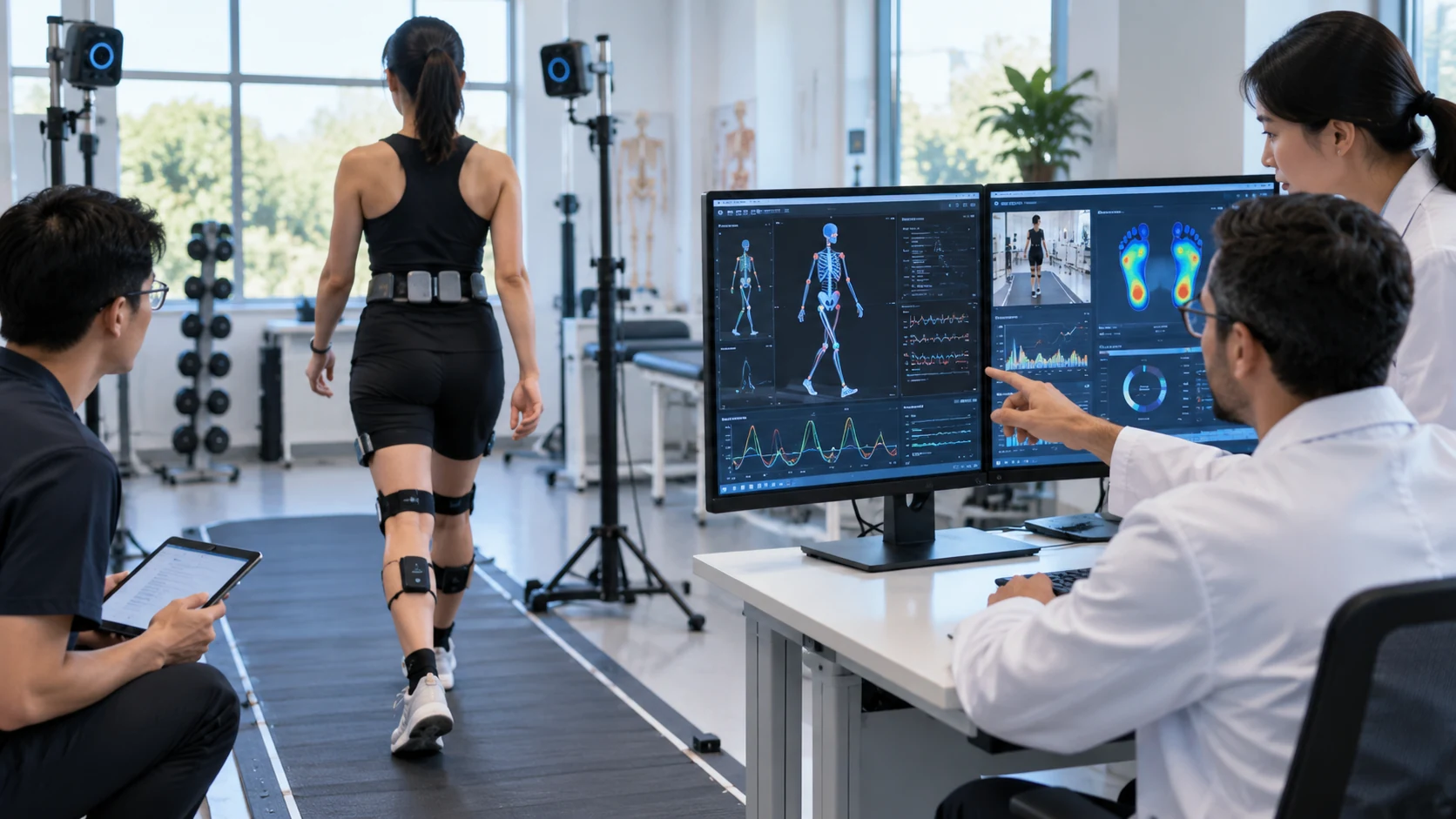
Artificial Intelligence & Intelligent Sensing
Combine artificial intelligence with wearable and biomedical sensing technologies to measure health and movement, identify digital biomarkers, predict risk, and support intelligent healthcare decision-making.
I
AIR PILLAR

Integrated & Connected Health Systems
Develop connected healthcare ecosystems combining IoT, cyber-physical systems, remote monitoring, and intelligent platforms to enable coordinated care across clinical, community, and home environments.
R
AIR PILLAR
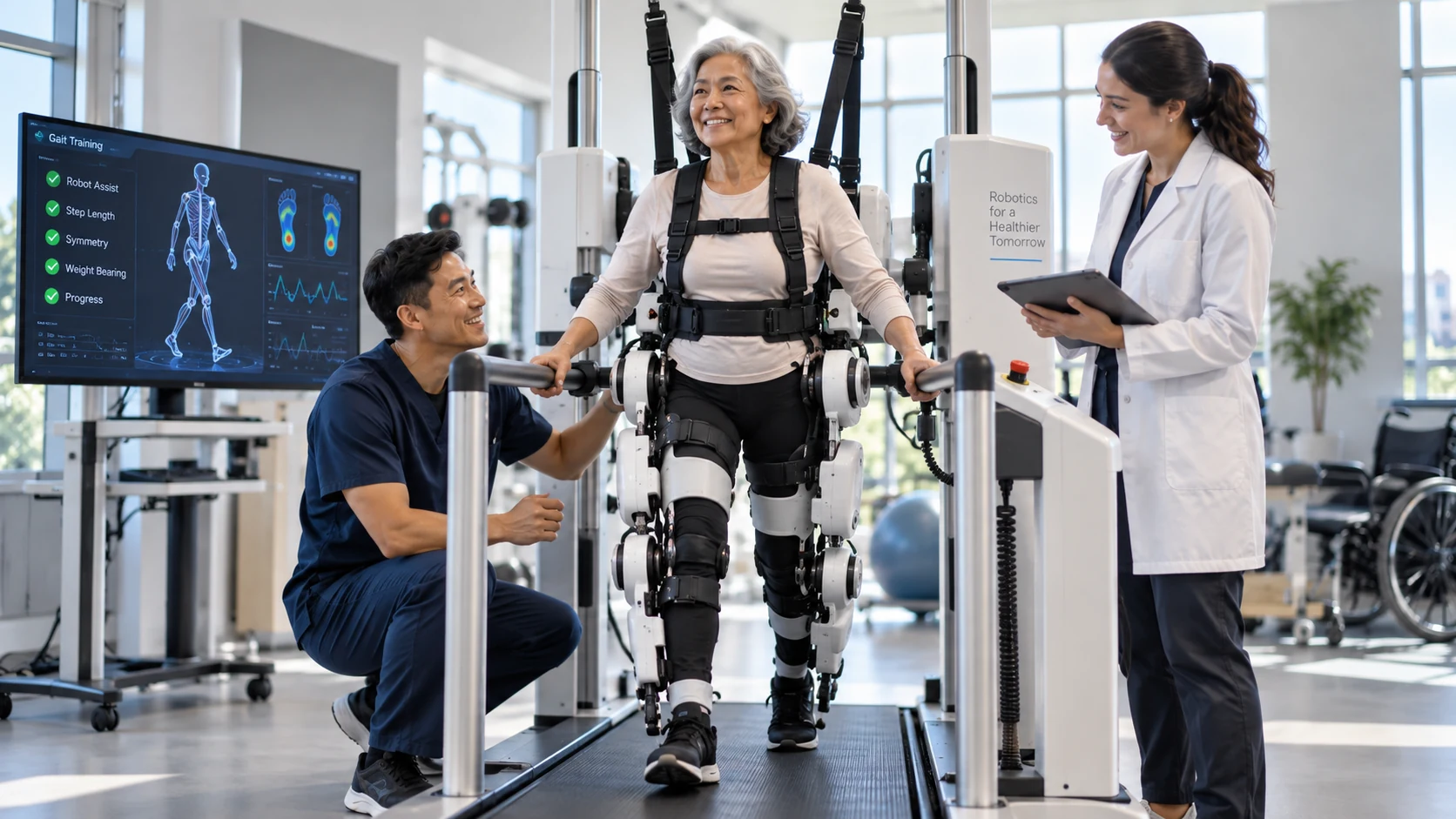
Robotics & Rehabilitation Technologies
Develop robotic and rehabilitation technologies including wearable exoskeletons, assistive robots, intelligent mobility platforms, and human-centred systems supporting recovery, mobility, and independent living.
“Our projects demonstrate a sustained commitment to translating advanced robotics, computing, and sensing research into practical, resilient solutions that protect human lives, improve clinical outcomes, and empower communities globally.”