9 June 2026
School of Computing, Engineering and the Built Environment Hosts Research Seminar on AI-Enabled RF Sensor Technology for Non-Invasive Bone Fracture Detection
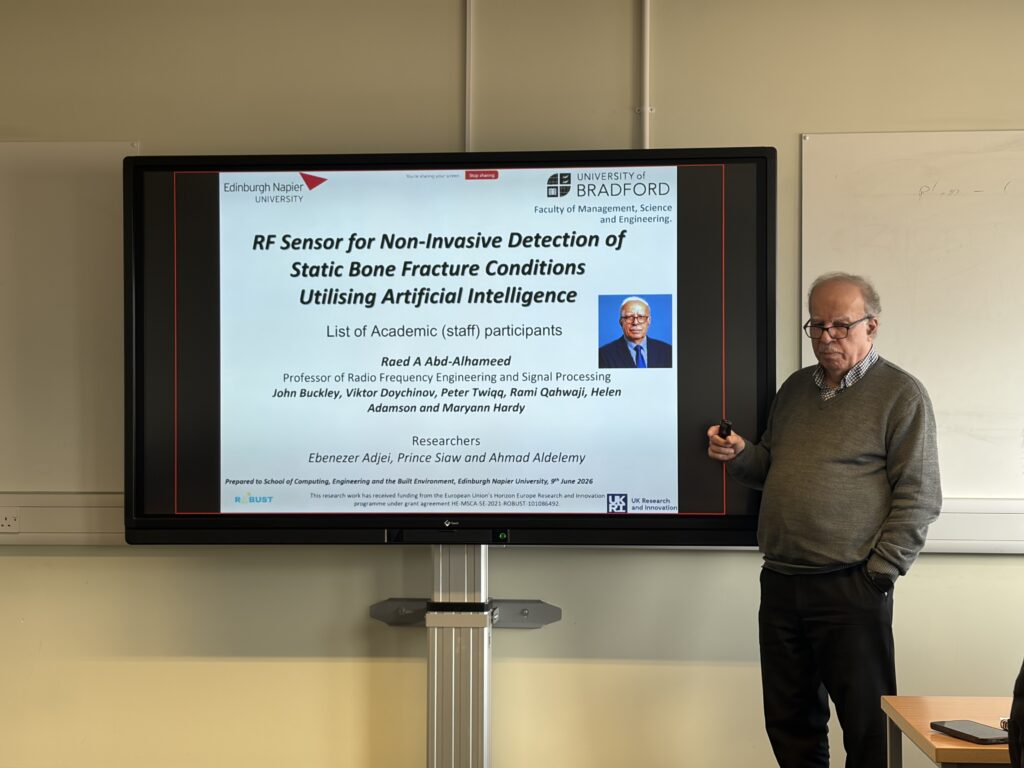
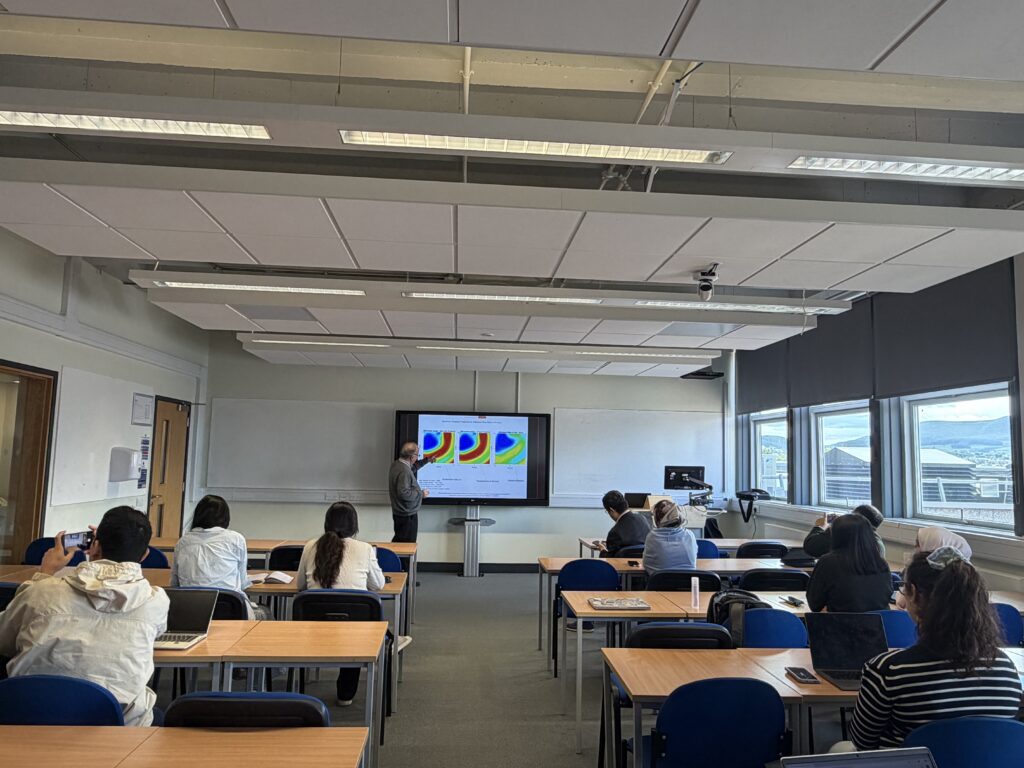
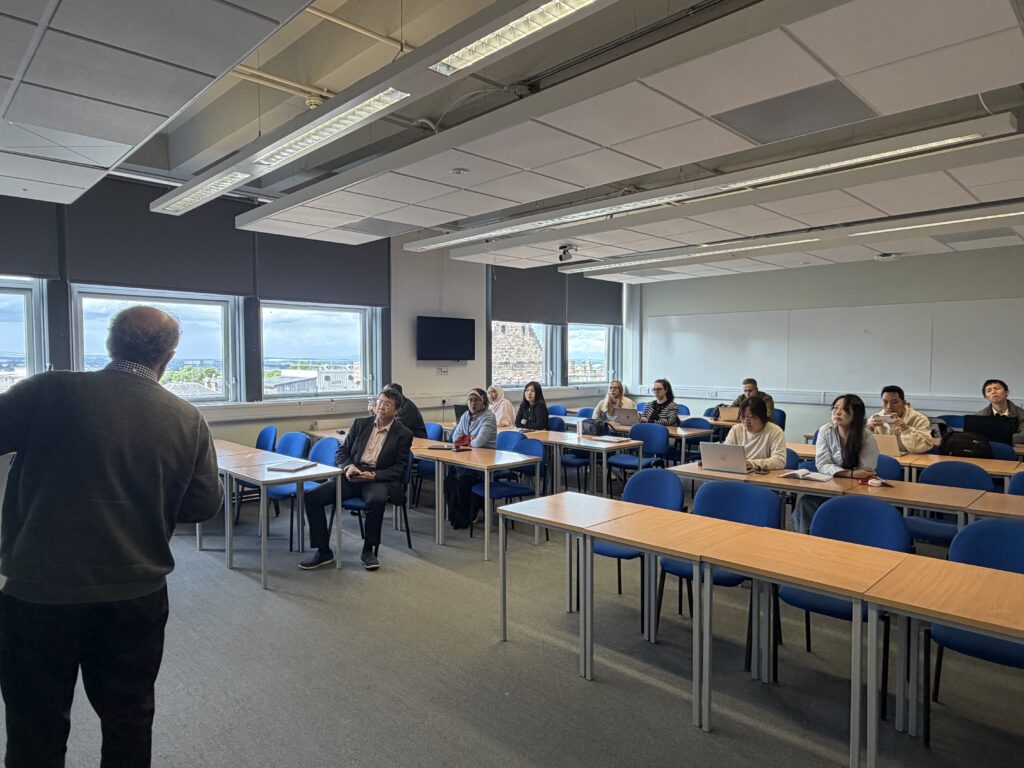
The School of Computing, Engineering and the Built Environment (SCEBE) hosted a research seminar presented by Professor Raed A. Abd-Alhameed from the University of Bradford, UK, on Tuesday, 9 June 2026, at MER_E13.
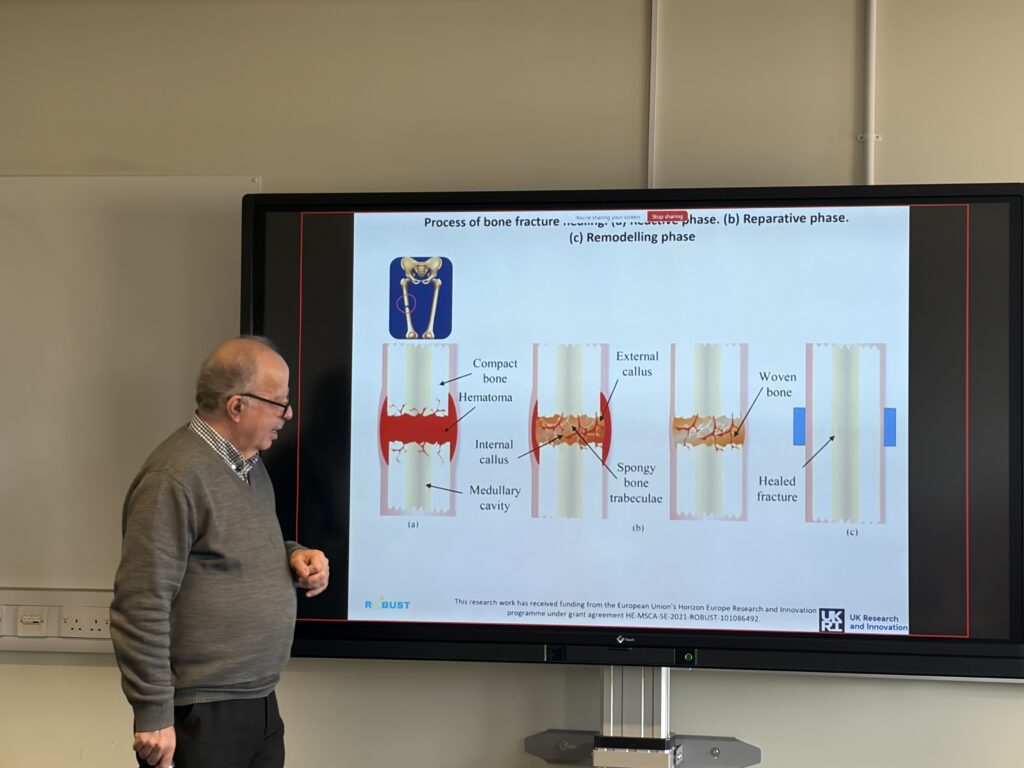
The seminar, titled “RF Sensor for Non-Invasive Detection of Static Bone Fracture Conditions Utilising Artificial Intelligence,” presented the design and simulation of a metamaterial-based radio frequency (RF) sensor employing Split-Ring Resonator (SRR) structures for the non-invasive detection of static bone fracture conditions.
The presentation discussed limitations of conventional imaging techniques, including X-ray, CT, and MRI, particularly in relation to accessibility, cost, radiation exposure, and the detection of micro-fractures. Professor Abd-Alhameed explained that the proposed sensor operates within the 1–3 GHz frequency range and uses SRR structures to enhance electromagnetic field confinement and sensitivity to dielectric variations associated with bone discontinuities.
Using full-wave simulations in CST Microwave Studio, the sensor was evaluated on a multilayer femur phantom incorporating anatomically realistic tissue layers. The results demonstrated the ability to detect fracture patterns as small as 0.1 mm in width and 20 mm in depth beneath a 5 mm cortical bone layer, with resonance shifts of up to 47 MHz and quality factors exceeding 80.
The seminar also covered the sensor design methodology, optimisation process, and the potential of compact, non-ionising, and wearable technology for future orthopaedic diagnostic and patient monitoring applications.
Professor Abd-Alhameed is Professor of Electromagnetic and Radio Frequency Engineering at the University of Bradford, UK. His research experience spans radio frequency engineering, antennas, wireless communications, signal processing, electromagnetic modelling, and computational techniques. He has authored more than 1,000 journal and conference publications, co-authored nine books, and holds several patents.
The seminar was of interest to researchers and postgraduate students working in sensors, healthcare technologies, artificial intelligence, wireless communications, electromagnetics, biomedical engineering, and related disciplines.