

AIR4Health
Research Themes
AIR4Health research is organised around three interconnected pillars spanning intelligent health measurement, connected healthcare delivery, and physical assistance. Together, A–I–R provides a translational framework linking artificial intelligence and intelligent sensing, integrated and connected health systems, and robotics and rehabilitation technologies.
A · AIR PILLAR
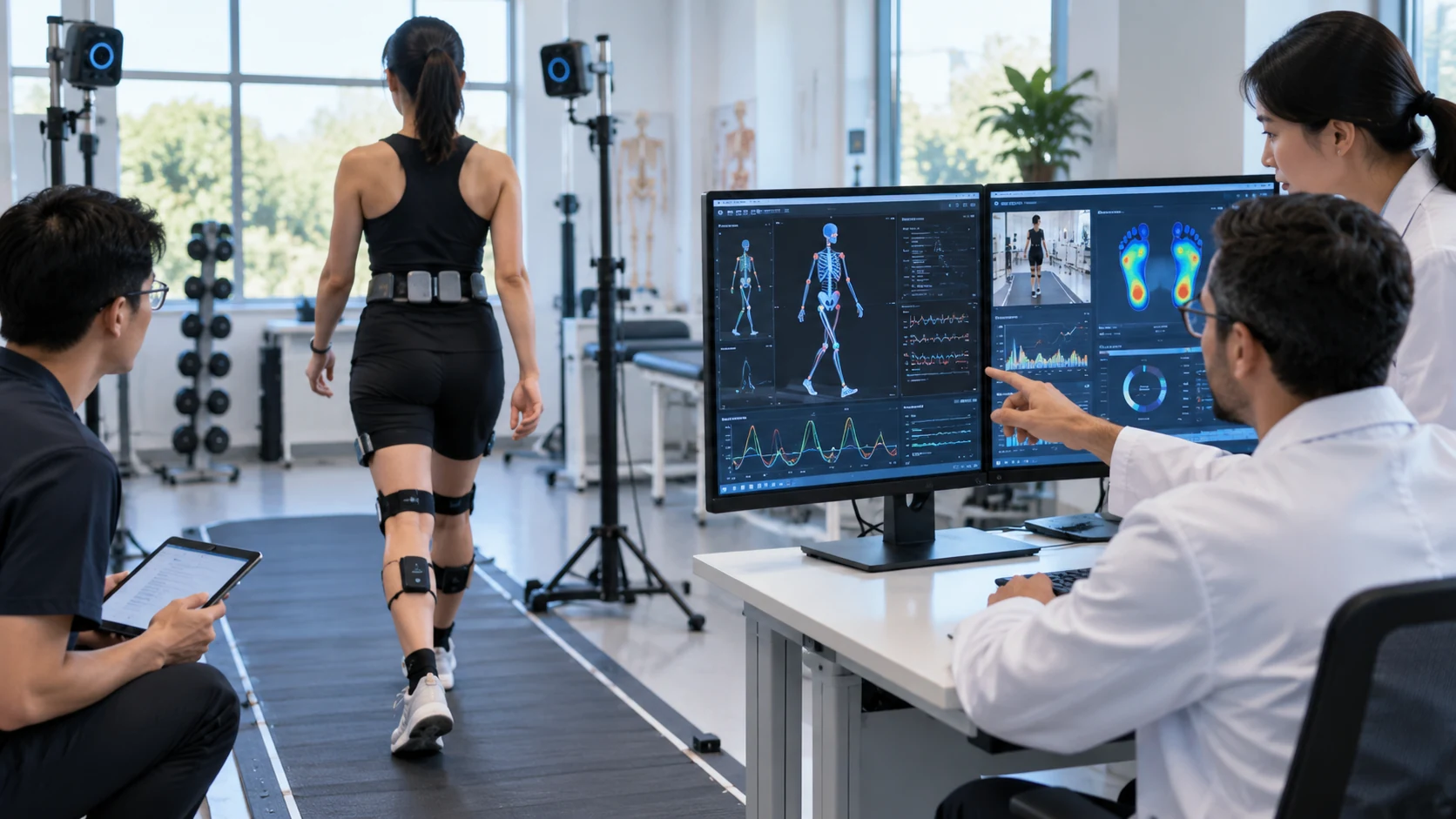
Artificial Intelligence & Intelligent Sensing
Sense · Understand · Predict
Combining artificial intelligence with wearable micro-sensors, body area networks, and machine learning algorithms to enable early disease detection, continuous biomarker tracking, and proactive fall-risk prevention.
- Proactive fall-risk prediction: Wearable inertial sensing and real-time gait biomechanics detecting pre-fall instability.
- Conformal body area telemetry: Low-power flexible sensors capturing clinical-grade bio-signals without patient burden.
- Intelligent diagnostic modeling: Multimodal deep learning uncovering subtle patterns in longitudinal clinical data.
Flagship Initiatives: AIWT4Care (British Council) • TTHER Sensing Stream • DeAP
Specialised Research Directions & Sub-Themes
A1 · Wearable Sensing & Human Movement
AI-Enabled Falls Prevention & Gait Analysis
Real-time fall-risk prediction using wearable inertial sensors, gait dynamic characterisation, and intelligent monitoring systems to safeguard elderly populations, improve balance confidence, and reduce trauma risk.
A2 · Biomedical Sensing & Digital Biomarkers
Body Area Networks & Conformal Sensors
Low-power implantable, flexible, and wearable body area networks for continuous physiological telemetry, chronic disease monitoring, and non-invasive biomarker sampling in ambulatory environments.
A3 · Healthcare AI & Intelligent Diagnostics
Digital Health, AI Diagnostics & Precision Care
Predictive modeling, intelligent diagnostics, and precision medicine approaches that transform multimodal sensor data and clinical records into actionable prognostic insights, empowering clinicians to personalize therapies.
I · AIR PILLAR
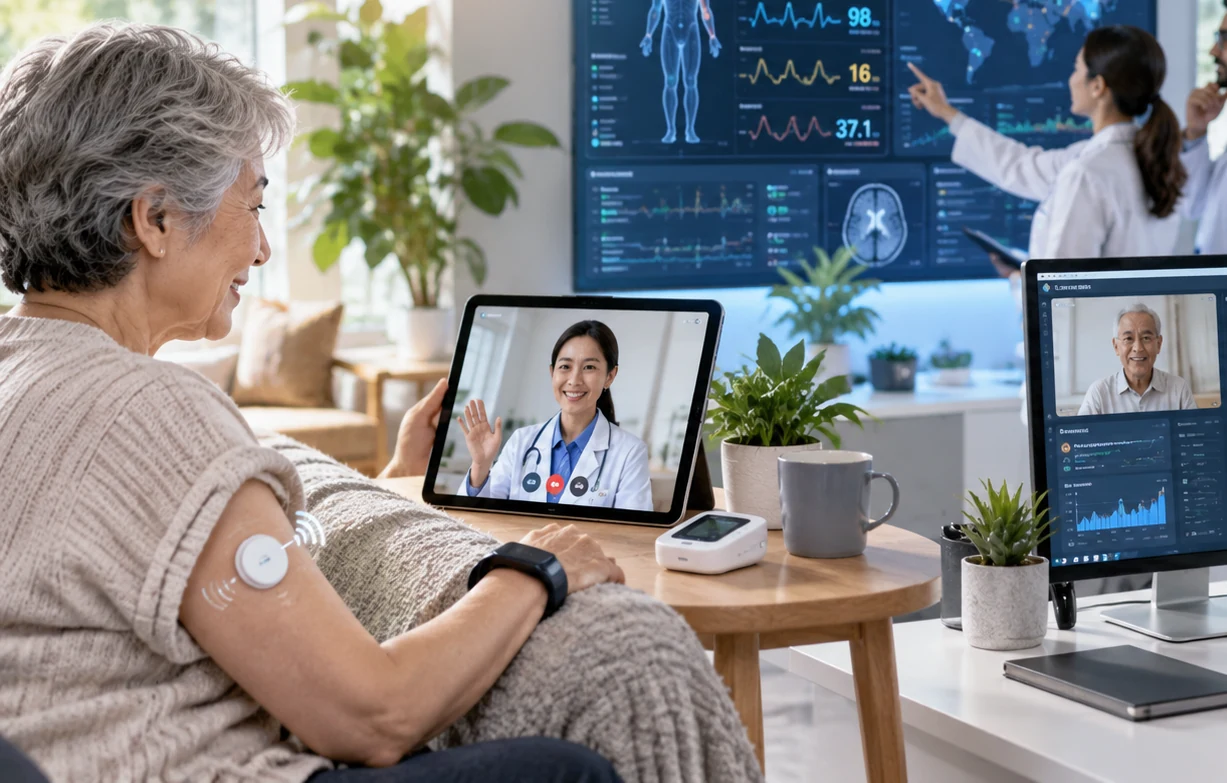
Integrated & Connected Health Systems
Connect · Integrate · Deliver
Developing interoperable IoT healthcare ecosystems, human-adaptive cyber-physical environments (Industry 5.0), and trustworthy generative AI architectures to deliver secure, responsive, and patient-centred clinical systems.
- Integrated IoT telemetry: Edge-to-cloud architectures streaming real-time vitals to clinical dashboards.
- Human-adaptive cyber-physical systems: Industry 5.0 workflows orchestrating hospital automation and clinician ergonomics.
- Trustworthy generative AI: Privacy-preserving synthetic data generation and federated clinical models.
Flagship Initiatives: THUNDER (Horizon Europe MSCA-SE) • Viet–Scot HACPS • Industry 4.0/5.0
Specialised Research Directions & Sub-Themes
I1 · Remote Monitoring & Connected Care
IoT Healthcare Ecosystems & Remote Telemetry
Connected healthcare ecosystems integrating real-time smart sensors, edge computing devices, and secure cloud platforms to support continuous remote patient monitoring, proactive alerts, and distributed home healthcare.
I2 · Healthcare IoT & Cyber-Physical Systems
Industry 5.0 & Human-Adaptive Healthcare
Human-centric healthcare cyber-physical systems that unite robotics, automation, and intelligent technologies to enhance hospital operations, optimize clinician workflows, and deliver safe, personalised patient care.
I3 · Secure Digital Health & Intelligent Platforms
Trustworthy Generative AI & Secure Health Data
Privacy-preserving generative AI architectures, synthetic medical data pipelines, and federated learning protocols enabling cross-institutional research collaboration while ensuring patient privacy and data sovereignty.
R · AIR PILLAR
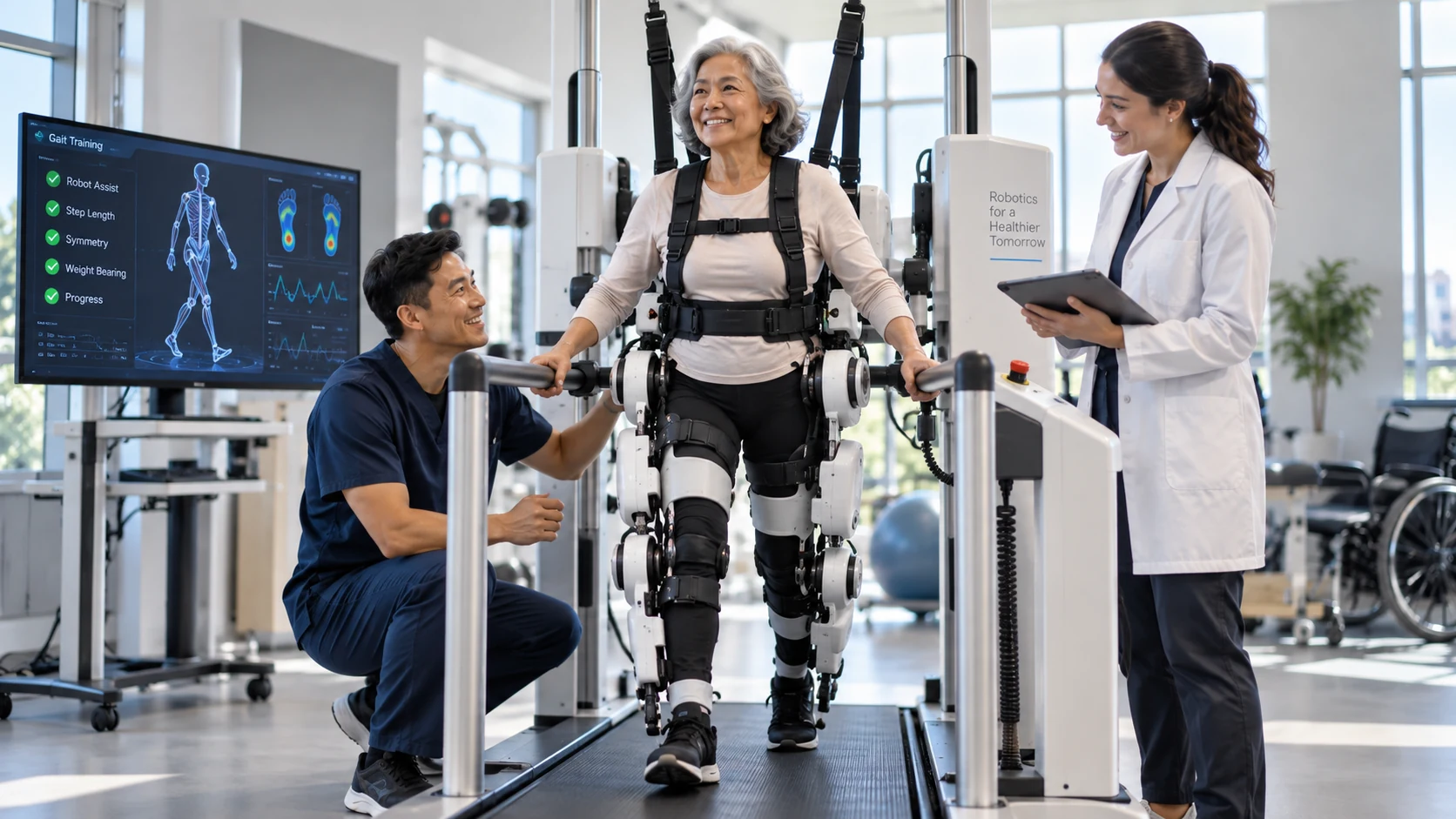
Robotics & Rehabilitation Technologies
Assist · Rehabilitate · Empower
Engineering intelligent robotic hardware, adaptive exoskeletons, and autonomous mobility platforms designed to assist neurological recovery, support motor rehabilitation, and protect human operators in demanding environments.
- Adaptive motor rehabilitation: Intelligent control architectures tailoring assistive torque to real-time patient muscle effort.
- Autonomous emergency mobility: AI-guided electric platforms engineered for disaster relief, triage, and rapid medical evacuation.
- Collaborative robotics: Human-in-the-loop co-bots reducing physical strain in healthcare caregiving and ergonomic tasks.
Flagship Initiatives: TTHER (ISPF) • iMARS (Horizon Europe) • Wearable Robotics
Specialised Research Directions & Sub-Themes
R1 · Rehabilitation Robotics & Exoskeletons
Exoskeleton Robots & Multistage Rehabilitation
Adaptive wearable robotic exoskeletons designed to guide motor relearning, mobility recovery, and neuromuscular rehabilitation across distinct stages—from intensive acute clinical care to autonomous home rehabilitation.
R2 · Intelligent Mobility & Robotic Systems
Autonomous EVs & Emergency Response
AI-driven autonomous electric vehicles and mobile robotic platforms engineered for rapid medical emergency response, triage assistance, and search-and-rescue navigation in hazardous or compromised environments.
R3 · Human–Robot Collaboration & Assistive Living
Human-Robot Collaboration & Assistive Living
Human-centric co-robotics and assistive smart machines empowering independent living for older adults and vulnerable patients, while alleviating physical ergonomic loads on caregivers and healthcare staff.
Our Research Philosophy
Interdisciplinary Convergence & Translational Impact
“We combine engineering, computing, healthcare knowledge, and international collaboration to create practical, scalable, and human-centred solutions for future healthcare systems.”
These themes reflect a strong commitment to interdisciplinary research, real-world application, and long-term impact across the UK and ASEAN regions. By bridging theoretical machine learning and hardware engineering with clinical practice, our research advances patient independence, clinical resilience, and global healthcare equity.
1. Rigorous Engineering & AI
Pioneering robust robotic mechanisms, low-power sensing circuits, and explainable deep learning models built for high-stakes clinical scenarios.
2. Clinical Co-Design
Directly collaborating with NHS clinicians, rehabilitation therapists, care homes, and patients to ensure real-world utility, safety, and adoption.
3. Global Research Consortia
Connecting Edinburgh Napier University with leading academic and industrial partners across the UK, Europe, and the ASEAN region.