

AIR4Health
Publications
Professor Hongnian Yu and the teams of AIR4Health pursue a wide range of interdisciplinary research across artificial intelligence, robotics, digital health, wearable technologies, intelligent control, cyber-physical systems, biomedical engineering, and sustainable technologies. The publications below are a selection from this wider body of work, reflecting strong international collaboration and a shared commitment to translating advanced engineering and computing research into practical, high-impact applications.
A

Artificial Intelligence & Intelligent Sensing
Wearable sensors, gait and movement analysis, physiological sensing, human activity recognition, machine learning, AI diagnostics, digital biomarkers, and predictive modelling research.
I

Integrated & Connected Health Systems
Healthcare IoT, remote monitoring, connected healthcare, cyber-physical systems, federated learning, privacy-preserving AI, secure digital health, and distributed intelligent systems research.
R
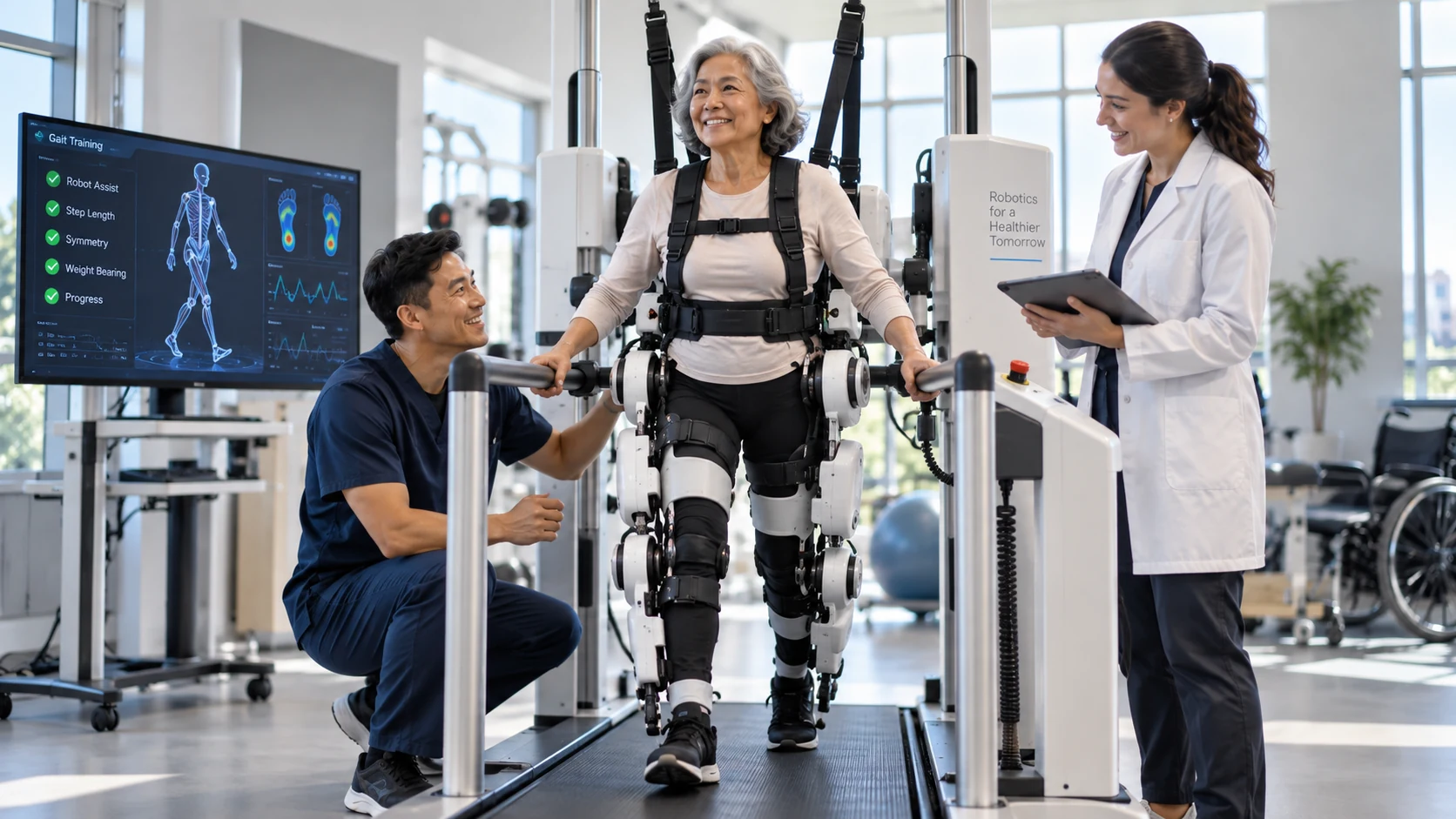
Robotics & Rehabilitation Technologies
Rehabilitation technology, robotics, wearable robotics, intelligent control, human–robot systems, mobility systems, and assistive technology research.
Selected Publications
Multifunctional ultra-low voltage sweat-activated battery using piezo-ionic hydrogel
Nano Energy, 149, 111729
This study presents a multifunctional ultra-low voltage sweat-activated fabric battery designed for emerging wearable technology applications, addressing challenges in low-voltage energy harvesting and wearable power systems.
DOI: 10.1016/j.nanoen.2026.111729 ↗Dual-channel Event-triggered Sliding-mode Heading Control for Unmanned Surface Vehicles
IEEE Transactions on Vehicular Technology
This paper introduces a data-driven dual-channel event-triggered sliding-mode heading control method for unmanned surface vehicles operating with uncertain dynamic models.
DOI: 10.1109/tvt.2026.3654060 ↗Transformer autoencoder framework for estimating core temperature of lithium-ion battery from pulse discharge dynamics
Applied Thermal Engineering, 288(Part 1), 129552
This research proposes a non-invasive transformer-based autoencoder model for estimating the internal temperature of lithium-ion batteries using pulse discharge data.
DOI: 10.1016/j.applthermaleng.2025.129552 ↗A Hermite Block-pulse hybrid method for nonlinear fractional optimal control problems
Journal of Applied Mathematics and Computing, 72(1), 24
This paper presents a computational framework for solving nonlinear fractional optimal control problems by combining Hermite functions and block-pulse methods.
DOI: 10.1007/s12190-025-02691-x ↗A Domain Adaptive IoT Intrusion Detection Algorithm Based on AEC–GAT Feature Extraction and Joint Domain Adversary
IEEE Transactions on Industrial Informatics, 22(3), 1850–1860
This article proposes a domain-adaptive intrusion detection algorithm for heterogeneous IoT environments, addressing data imbalance and limited labelled samples.
DOI: 10.1109/tii.2025.3631964 ↗DC-PFL: A dynamic clustering-based personalized federated learning method for human activity recognition
Engineering Science and Technology, an International Journal, 72, 102230
This study presents a personalized federated learning framework using dynamic clustering to improve human activity recognition while preserving data privacy.
DOI: 10.1016/j.jestch.2025.102230 ↗Dynamic Event-Triggered Bipartite Formation for MIMO Multiagent Systems With Quantized Data
IEEE Transactions on Cybernetics, 56(2), 619–630
This article explores distributed data-driven bipartite formation control for nonlinear multi-input multi-output multiagent systems using quantized data.
DOI: 10.1109/tcyb.2025.3614090 ↗Experience-based integral reinforcement learning consensus for unknown multi-agent systems
Scientific Reports, 15(1), 32962
This publication investigates optimal consensus control for unknown nonlinear multi-agent systems using online integral reinforcement learning and critic-actor neural networks.
DOI: 10.1038/s41598-025-15573-w ↗Resource-efficient sliding mode control for unmanned aerial vehicles with multiple faults and hybrid cyber attacks
Advances in Mechanical Engineering, 17(9)
This paper examines robust sliding mode control for quadrotor UAVs under actuator faults, partial failures, and hybrid cyber-attacks, with emphasis on resource-efficient implementation.
DOI: 10.1177/16878132251376247 ↗State-Space Modelling of Schottky Diode Rectifiers Including Parasitic and Coupling Effects up to the Terahertz Band
Electronics, 14(18), 3718
This study presents a nonlinear state-space model for Schottky diode rectifiers, incorporating junction dynamics, parasitic effects, and electromagnetic coupling up to the terahertz band.
DOI: 10.3390/electronics14183718 ↗Quantized‐Based Data‐Driven Iterative Learning Heading Control for Unmanned Surface Vehicles With Data Dropouts
International Journal of Robust and Nonlinear Control, 36(2), 683–693
This paper studies model-free adaptive iterative learning heading control for unmanned surface vehicles with quantized data and data dropouts.
DOI: 10.1002/rnc.70101 ↗Foot Pressure-Based Abnormal Gait Recognition With Multi-Scale Cross-Attention Fusion
IEEE Transactions on Neural Systems and Rehabilitation Engineering, 33, 3146–3159
This research proposes a multi-scale cross-attention fusion framework for abnormal gait recognition using foot pressure data, with applications in healthcare monitoring and diagnosis.
DOI: 10.1109/tnsre.2025.3597639 ↗Enhancing human activity recognition with TB-ConvAtt: A multi-dimensional attention framework
Biomedical Signal Processing and Control, 110(Part A), 108314
This article presents a multi-dimensional attention framework for improving human activity recognition using wearable sensor data in healthcare settings.
DOI: 10.1016/j.bspc.2025.108314 ↗Wide Linearity Range and Rapid‐Response Tactile Sensor Inspired by Parallel Structures
Advanced Science, 12(32), e06783
This study reports a tactile sensor design inspired by parallel structures, improving both linear response range and response speed for real-time sensing applications.
DOI: 10.1002/advs.202506783 ↗Data-Driven Event-Triggered Fixed-Time Load Frequency Control for Multi-Area Power Systems With Input Delays
IEEE Transactions on Circuits and Systems I: Regular Papers, 72(12), 8492–8504
This paper proposes a reinforcement learning-based event-triggered fixed-time load frequency control approach for multi-area power systems with input delays.
DOI: 10.1109/tcsi.2025.3580122 ↗Data-Based Encryption Iterative Learning Heading Control for Unmanned Surface Vehicles
IEEE Control Systems Letters, 9, 973–978
This letter investigates data-driven iterative learning heading control for unmanned surface vehicles with encryption and decoding mechanisms.
DOI: 10.1109/lcsys.2025.3578918 ↗Composite Motion Control of Cable-Driven Continuum Robots: An Auxiliary-System Based Compensation Method
IEEE Transactions on Industrial Electronics, 72(11)
This publication addresses high-performance motion control of cable-driven continuum robots under model uncertainties, actuator saturation, and measurement delays.
DOI: 10.1109/tie.2025.3558067 ↗Advancing real-world applications: A scoping review on emerging wearable technologies for recognizing activities of daily living
Smart Health, 36, 100555
This scoping review examines emerging wearable technologies for recognizing activities of daily living, with focus on healthcare applications and real-world usability.
DOI: 10.1016/j.smhl.2025.100555 ↗Nanocellulose Extraction from Biomass Waste: Unlocking Sustainable Pathways for Biomedical Applications
The Chemical Record, 25(5), e202400249
This article explores sustainable nanocellulose extraction from biomass waste and highlights its potential biomedical applications.
DOI: 10.1002/tcr.202400249 ↗Dementia Friendly Buildings—Approach on Architectures
Buildings, 15(3), 385
This paper examines architectural approaches and design principles for dementia-friendly buildings that better support people living with dementia.
DOI: 10.3390/buildings15030385 ↗