

24 June 2026
From Edinburgh to Bucharest: ENU PhD Researcher Completes iMARS Secondment at IMSAR
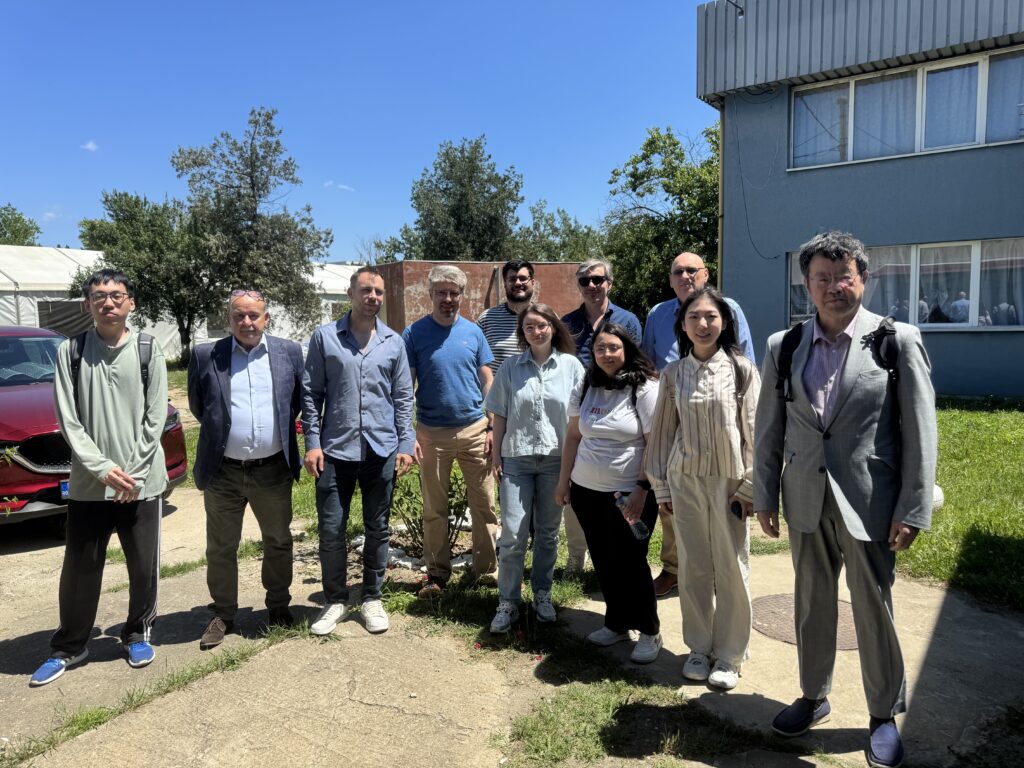
Edinburgh Napier University’s iMARS research team has further strengthened its European partnerships, as PhD researcher Zitong Chai (School of Computing, Engineering and the Built Environment) completed a ten-week Marie Skłodowska-Curie secondment at the Institute of Solid Mechanics of the Romanian Academy (IMSAR) in Bucharest.
The secondment ran from 16 April to 24 June 2026, as part of iMARS — Intelligent Multi-Agent Robotic Systems — an MSCA Staff Exchanges project (Grant Agreement No. 101182996) coordinated by IMSAR. The project brings together first responders, industry and research institutions across Europe to develop intelligent, robot-assisted systems for emergency operations, combining autonomous platforms, multimodal sensing and AI-based Decision Support Systems (DSS) to improve situational awareness and reduce risk for first responders.
Hands-on Research at IMSAR
Working full-time in IMSAR’s laboratories, Zitong contributed to two core iMARS work packages that sit at the heart of the project’s decision-support agenda.
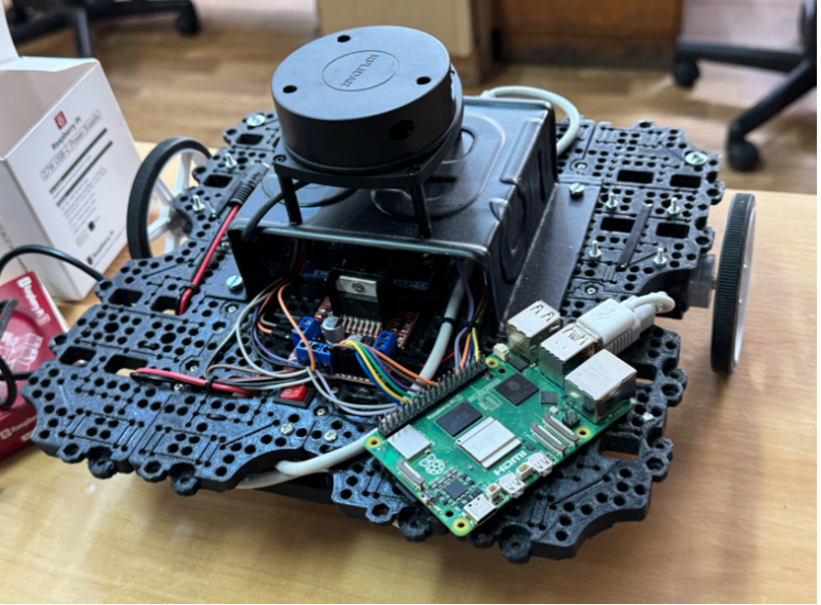
Under WP2 (Technical and usability requirements for DSS and data protocols, Task 2.4), she gained practical experience with an experimental drone platform — from hardware architecture and sensing modules to communication interfaces for AI-enabled DSS. These activities informed the technical and usability requirements that will shape future multimodal decision-support designs.
Under WP5 (Designing of the Decision Support System algorithms, Task 5.1), the secondment focused on physiological sensing. Training covered EEG acquisition principles, electrode positioning, frequency bands, signal-quality assessment, artefact reduction, OpenBCI configuration, and real-time visualisation. Practical demonstrations — including EEG-controlled drone/robot experiments — provided first-hand experience of linking biosignals to robotic control, a capability with clear relevance to both healthcare monitoring and human–machine interaction in emergency settings.
Discussions throughout the visit also explored how EEG can be combined with wearable IMUs, gait analysis and rehabilitation robotics inside explainable AI (XAI) frameworks — connecting Zitong’s PhD research on wearable sensing with iMARS objectives for multimodal, trustworthy DSS.
“The secondment offered invaluable hands-on experience integrating physiological sensing with AI-driven decision support. Working daily with the IMSAR team gave me a much deeper appreciation of how EEG, wearable IMUs, gait analysis and rehabilitation robotics can come together within an explainable AI framework to support real-world systems.”
— Zitong Chai, PhD Researcher, Edinburgh Napier University
Building the ENU–IMSAR–Stimpex Partnership
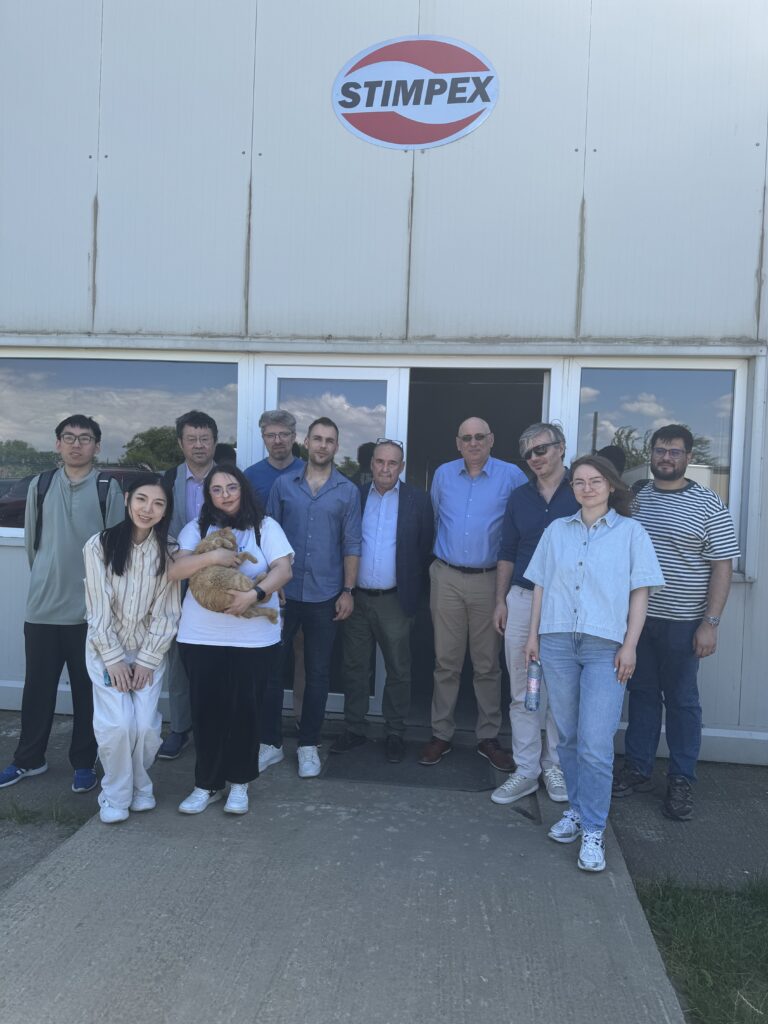
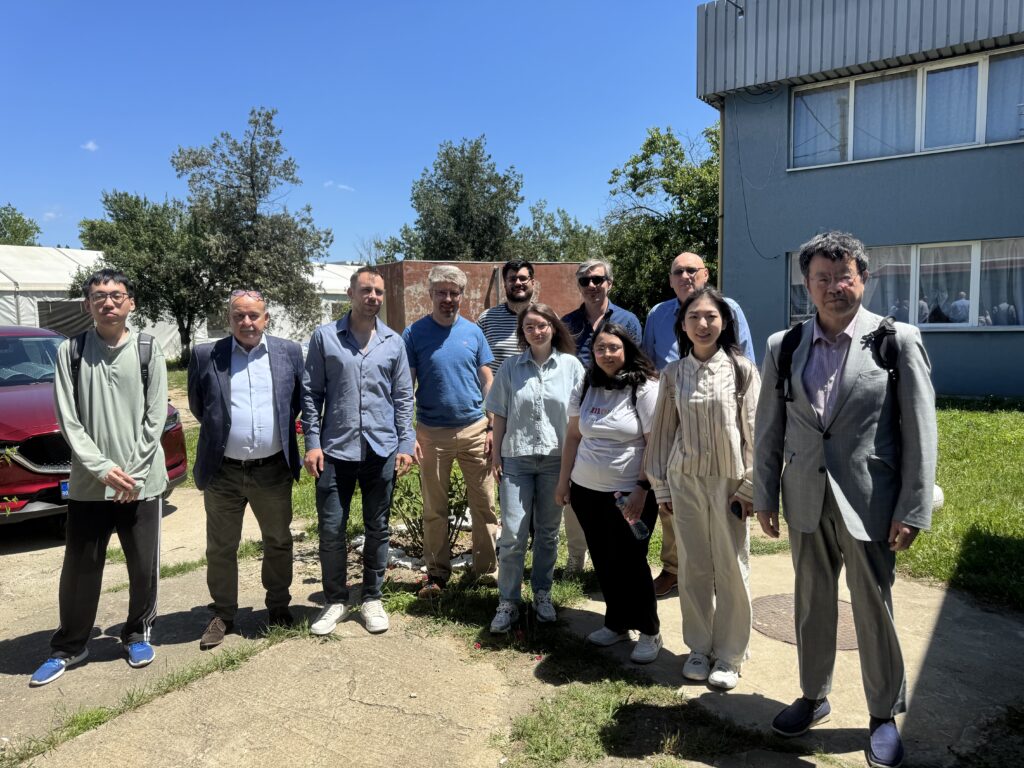
Beyond individual research training, the secondment reinforced the consortium’s academic–industry triangle. Zitong took part in joint technical discussions with researchers from IMSAR, ENU and Stimpex S.A., the Romanian industrial partner specialising in CBRN sensing technologies and ruggedised hardware for emergency environments.
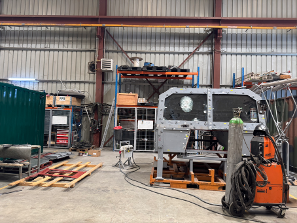
An official technical visit to Stimpex explored industrial technologies and routes for future collaboration, alongside laboratory visits at IMSAR covering rehabilitation robotics, wearable sensing and AI. Daily collaboration with the IMSAR team, and joint meetings across partner institutions, supported the knowledge-exchange aims of the MSCA Staff Exchanges programme.
Research Dissemination
The secondment also supported dissemination of Zitong’s ongoing PhD research. The conference paper “AI-Driven Wearable Sensor Analytics for Dementia Monitoring: Machine Learning, Deep Learning, and Emerging Foundation-Model Opportunities” (Chai, Z., Zhou, Y. & Yu, H.) has been accepted at the 2026 31st International Conference on Automation and Computing (ICAC). The work aligns with WP5 by examining multimodal sensing and explainable AI approaches that can inform future DSS design.
Progress was also shared through Professor Hongnian Yu’s regular online iMARS research workshops on 29 April, 12 May and 28 May 2026, which bring together PhD researchers and visiting scholars from across the group’s international collaborations. At each workshop Zitong presented secondment progress, technical training outcomes and wearable-sensing results, and received feedback from supervisors and consortium colleagues.
Looking Ahead
Reflecting on the host environment, Zitong highlighted the scientific community at IMSAR and the value of working day-to-day inside an international laboratory.
“My colleagues were incredibly welcoming, involving me in their ongoing projects and technical discussions from day one. Beyond the lab, exploring Romania together at weekends gave us space to talk through research ideas and future collaboration plans in a really natural way.”
— Zitong Chai

The secondment marks a further step in the growing partnership between Edinburgh Napier University and IMSAR. It lays groundwork for future joint publications and continued collaboration on multimodal sensing and AI-driven decision support as iMARS progresses — work that also connects ENU’s research in wearable healthcare analytics with the project’s first-responder mission.
Zitong would like to thank Professor Hongnian Yu for his continued supervision and for making this secondment possible, and the IMSAR team for their hospitality and close collaboration throughout the visit.
This secondment was undertaken as part of iMARS (Intelligent Multi-Agent Robotic Systems), funded by the European Union under the Marie Skłodowska-Curie Actions Staff Exchanges programme (HORIZON-MSCA-2023-SE-01-01, Grant Agreement No. 101182996).